June 7th, 1995. 1:15 AM. You arrive home after a year abroad. You expect your family to greet you, but the house is empty. Something’s not right. Where is everyone? And what’s happened here? Unravel the mystery for yourself in Gone Home, a story exploration game from The Fullbright Company.
Gone Home does not feature much interactivity, but instead has the player explore the house at their own pace and determine what has transpired by examining items, journals, and other items left around the various rooms. The Fullbright team, having previously worked on BioShock 2: Minerva’s Den, took concepts and ideas from that game to craft an exploration game to engage the player in uncovering the narration by non-linear progression by searching the house, while keeping the project manageable for their small team.
Gone Home was critically praised at release. Several outlets used the game as an example of video games as art, as its non-standard gameplay format demonstrates progression of the video game industry into more artistic forms. However, this also raised the question of whether Gone Home should be considered a game, and led to the derogatory term “walking simulators” to describe exploration games with little interactivity, though since then, the industry has come to embrace the term. Gone Home‘s characters and story were praised for addressing LGBT issues with which some players could identify. (wiki)
SYSTEM REQUIREMENTS (MINIMUM): Windows 7 SP1 or higher / 1.80GHz Processor / 2GB Memory / DX10 Video card with 512MB of VRAM // (NOTE: Intel HD Graphic 4000 NOT CURRENTLY SUPPORTED on Windows 8) /2GB HDD space
On several accounts, this is probably one of the most interesting pieces of current politics as a spectacle I have seen recently. It is several hours long and it is really interesting to skip through, on several accounts that I want to detail below. It is basically an almost textbook example of double standards and also a way to see how Congress politicians (US) that would normally disagree on almost everything (Medicaid, immigrants, Green New Deal etc.) are agreeing on one thing: that the popular social platform TikTok cannot stay under Chinese ownership. That’s a strange form of nationalisation- something that is anathema for both US liberals and cons. Also, one cannot understand this sudden Tiktok phobia without previous measures taken to curtail reliance on Huawei infrastructure or the whole scare around G5, with the Chinese leading the new global technology standardisation measures. So here it is:
This hearing is an unexpected proof of the links between the Silicon Valley tech giants and NSS, an institutionalized relation that has been amply explored by Linda Weiss in American Inc.?. That amazing book from 2014 gives so much insight into the e U.S. innovation system. It ends on a warning note – a perceived un-productivity or inefficiency that has stifled innovation, a decline that has only accelerated these last years. This history of institutional bootstrapping that has grown out of the Cold War pursuits of technological supremacy and permanent defense preparedness in front of external threats – has produced a very successful combination indeed, yet it has stopped bringing in the expected results. This combination of geopolitical threats and domestic political constraints that has been such a catalyst for countless start-ups, for huge technological breakthroughs in robotics, space technologies, and nanotech, and that had this tip-toe coordinating role in the private-public relationships was starting to wobble and crack up. Financialized corporations are being regarded as stifling innovation and actually boycotting R&D in today’s world. Since about 1910s monopoly capitalism has been the name of the game, and huge corporations (big firms socialized by banks and stock markets) found themselves not in competition with other firms so much as with the growing power of trade unions. Responding to these pressures as well as Bolchevik fear mongering, Maynard Keynes opus called The General Theory of Employment, Interest and Money basically (as Charles Mudede put in a recent post) basically advices and advocates for the transformation of the working class (mostly white) into white collar workers that defined the second half of the 20 century. Now that middle class has declined in the West and is mainly growing in China and India (and probably Africa in the future). According to others he didn’t stabilize capitalism as much as save a crumbling British Empire. Right-wing Keynesianism and military deficit spending may try to do just that for the American Empire but there’s other forces at work. BRICS (India, Brazil, China, South Africa, Russia) signals a change and willingness to avoid over-reliance on the dollar as an international currency reserve (and by extension the US Fed). What’s more fascinating than to see a world power that promoted free trade for decades turn into a “protectionist”?!
The fact that this TikTok hearing is not like the Facebook Zuckerberg hearing before Congress four years ago is also a sign of the times. There not only a premium of Congress to show off its patriotic alliegence and anti-China sentiment in public, but also a huge benefit to be reaped for Big Tech that has shown itself a national assett on the global stage. Everything is allowed on the global hegemony stage, even kamikaze gestures like fucking up the careers of scientists that have previously worked for you, and are now considered unreliable or potentially a liability in the new climate of China Initiative launched by the Trump government in 2018 and continued under Biden.
Another thing that comes across from various reactions and comments and online memes produced after the hearing (from the Sinosphere as well) is that it is all a witch hunt. The majority of proof brought by the Congress was frankly laughable. This hearing has been really working against the intentions of the Congress, and actually gained support and even celebrity status for the relatively unknown Shou Zi Chow, a citizen of Singapore not mainland China.
What is again quite clear is that politicians (US and elsewhere, with the exception of China maybe) are completely at the mercy of technologies that they do not care to understand, regulate or mitigate. They are basically (as one friend put it) surfing platforms that are managed by their campaign managers or specialists, while they live in a sort of blissful ignorance. It is very clear that they do not care to understand what these platforms are about, as long as they can reap benefits or if they think that the surveillance, misinformation and addictive-behavior-inducing apps at home is provided by what they consider American-patriotic platforms. Also, Red Scare is apparently not a bygone thing, and everything can be mobilized in the new Cold War. It basically made them look both ridiculously united and also completely out of their milieu in terms of the Internet and social media.
The increasing sensation that TikTok has somehow gamed the algo capitalist economy and has suddenly offered or at least intensified things in a new direction. As my friend Cristian Dragan and Ion D sez (both have taken to exploring TikTok new hybrids), the platform seems to create overnight popularity, turbo-charging popularity sky-high like nothing seen before (with the likes of Insta or FB) and also allow a much higher degree of horizontal shuffling or at least a combination of otherwise invisible content (from countryside location, to menial jobs, to the city to areas considered completely isolated). This comes with a greater susceptibility to vibes and to hybridization of styles visual or musical.
Bruh, I don't recommend watching any of the TikTok Congress hearing.
It shows how technologically behind our governmental officials are.
spacetime coordinates: in the near future of a zoned and enclaved United States of America with Disneyland city-states
Production:
Damaged PowerAid vending machine Edited by Jason Harvey Executive produced by Reggie Henke Produced by Mackenzie Jamieson Ny Footage shot by Johnny Frohman Music by Jerry Paper Staring Nate Varrone, Danny Catlow, Rich Sohn
Thanks a lot toFelix Petrescu(my main source for many things vimeo, cinematic, musical & digital culture related outside of this blog) for suggesting one of the most emblematic videos I have seen lately. On one side it is a fictitious, humourous, unruly dark anti-Disney nightmare. Frankly, the horrific ride and family trip to Disneyland gone bad from Escape from Tomorrow (2013) directed by Randy Moore appears benign in comparison with Rebranded Mickey Mouse. The rampage and amok generated by this short are on par with our daily media offerings , an experience exposed to the overdrive of the post-truth (military-entertainment powered) era.
On the other – Disneyland – is revealed as something else completely, not the Twilight Zone of Escape from Tomorrow, but a way to understand what capitalism looks like nowadays, how -using the title of a new critical reader -these forms of “mutant neoliberalism“ have proliferated. In a way, nothing appears familiar, mainstreamed or standardized because the most fringe things have been amplified by platform capitalism. We are dealing with a growing fragmentation and vectoring of oddity that no longer seems to stick to the old liberal mold. In a world where everything is reduced to self-promotional activity, Rebranded Mickey Mouse is also a parody of the “pitch”, of finding something out-of-the-box, of something “new”. Original satiric horror movies like the 2020 I blame Society movie or Brand New Cherry Flavor series start exactly when the pitch does not work, or when as a women horror director, you get an asshole ripping you off or geting all the credit.
You can only pitch your ideas to a mega-franchise and it is the only way to make an impact. An anarchic and sadistic Steamboat Mickey has already attracted the attention of Walter Benjamin early on (something that I tried discussing here). Benjamin remarked on both the liberatory potential of the Disney anthropomorphized mascot as well as how (later on) the brutality of this misbehaving surreal cartoon could be channeled into unhinged fascism for real. I hope I can elaborate elsewhere about the ventures of military-entertainment-Disney complex.
Rebranding Mickey Mouse format and style and technique is quite interesting. It is almost like a found footage short, but not quite. It looks more like a nature wildlife (or urban wildlife) movie because it uses a lot of infrared or at least night vision shots, surveillance footage, multiple CCTV screens and even at some point the ubiquitous Chinese facial recognition software shots – becoming a staple signifier in Western pop for high-tech dystopian authoritarianism. But instead of some hyenas or some foxes, you get a grotesquely painted guy with M Mouse ears talking into the camera while he roams trough the bushes, city or private homes.
Today’s geopolitical or technological fears have a certain look. Real or imaginary they show the impact on Western pop culture of more general trends or alignments and decoupling. Witch-house bands making a few years ago goth or healthgoth style video clips (thanks pnea for signaling this) have suddenly switched to something more geopolitically attuned. They are using in their latest music videos (in contrast with earlier standards) graphics and footage that shows or mimics easily recognizable surveillance aesthetics associated with “social credit” in China, or the facial recognition apps or traffic videos of Chinese jaywalking. Dark-tinted glasses are not dark enough today if they do not point in the direction of your currently preferred dystopian outlook.
I liked the fact that complete commodification has ensured that every extreme act (killing a Disney exec for example) by the Rebranded M Mouse is part of a promo campaign or a pitch to the mother company. One can only get the attention of higher echelons, and find employment as their new mascot if you are basically a break-in, and attract the attention of the police or law enforcement, that collaborates (almost like in the recent Trump indictment) to somehow achieve even more notoriety. More media coverage is good and the violence attracts attention. Violence is the only way today to show that one means business. Mayhem ensues when a supposed Disney fundamentalist stabs and kills the Rebranded Mickey M during a live press event. The whole media/platform environment works as a trampoline for such extreme acts and even contributes to aggravating and launching the 3 WW.
What I found refreshing is that is is not a war against an enemy from the outside, but an enemy on the inside: the very American household brand Disney. President G I Joe Biden is himself adeep fake president – and uses a deep fake voice to launch an all-out nuclear attack on all the Disneylands within US borders. It comes as no surprise that such an extraterritorial state model has become a reality. If as historian Quinn Slobodian reminds us in his latest book Crackup Capitalism: Market Radicals and the Dream of a World Without Democracy (that I haven’t had the chance to read yet), we deal with a long history of bizarre but very specific neo-liberal heretics, this video also highlights the difficult road towards an indefinitely postponed “market utopia” or catastrophe libertarianism. From the beginning, such individualist zoning has been aimed against Socialist states but was also a way to circumvent all market controls and discard both democratic mechanisms and gun controls (in the US case). This is a typically Western dream about Asian-Pacific development as a libertarian prosperity solution, an entrepreneurial wishful thińking about Free Economic Zones or freeports plans that has taken hostage the startup community. The reality has been that this economic model of anti-democratic success, based on specific Asian (HK or Singapore) precedents has been very difficult to replicate elsewhere, particularly without major state support and steady flow of subventions.
Disneyland in this short fictive video has in the meantime acquired the status of a “land”, opposed to the very idea of the 19th century nation-state. Well, anyway such Disneyland corporation separatism (always with US backup) has amassed more power than an average small country. At the same time, because of its association with Western values (both specifically American conservative values & individual freedoms), Disney is still open to sanctions or boycotts from the outside (see cancel culture in a larger global and non-Euroamerican context). So at the moment when Disney has become the American Dream export par excellence, the global giant has ij this video morphed into a smaller Lichtensteins or Luxembourgs or Singapores with their own laws (its own constitution?), its own private army, and a Disney Ministry of Defense.
One can see a lot of collusion between the global ailing (or at least reconfiguring) US hegemon and its autonomous entertainment arm with embassies in Paris and Tokyo. Disney has been a global arm of the US influence everywhere including Eastern Europe but it has also achieved a sort of untouchable autonomy. So let’s speculate further. As much as Google, Apple, FB, Microsoft, the Disney+ streaming service functions as a monopoly to elbow out Netflix, but also as a potential chain of extraterritorial microstates. You do not have only US army bases but also a chain of “degenerate utopias” masked as theme-parks (a term reprised by Darko Suvin from Louis Marin 1973), that have complete discretion over their non national labor force (hire-fire-and-dump them model), but also upon what is considered illegal or unwanted.
Disney as form of soft power certainly, but also one could easily spill over into hard power and global conflict. That is, whenever and wherever US interests and cultural imperial status quo in this matter seems threatened. It is really interesting to hear the calls for Big Tech regulation following the ridiculous but very telling bipartisan hearing of the TikTok CEO recently and hopefully this won’t be just a witch hunt. At this moment, no one sees the Disney conglomerate as a threat to national security, nor do they see Palo Alto BIG TECH as such a planetary threat closer to home, although these platforms were the ones spreading disinformation at home and destabilization across the globe. For me, this is actually the whole scope of this short mad video – to find a situation where a US household brand triggers the actual downfall of the US, not China or any other external power vying for global hegemony. What escapes most of the current analysis, and what Quinn Slobodian achieved in his recent book I think is making neoliberals wake up from their “Hayek island” dream. This is how the whole democracy rhetoric has been hollowed out from the inside by the very promoters of free trade within special economic zones. Ethno populism tends to obscure the fact that the whole national state discourse and ‘bring back prosperity’ or ‘make America great again’ at home is “perforated” (as Slobodian observes) by numerous tax-free special zones that aim to attract global investors and hope to emulate Dubai in UK, US or elsewhere.
As some have remarked earlier, the Joker villain – from the Batman (DC franchise) isn’t so much a villain but a sort of exemplary broker gone loose, a total libertarian freedom fighter nutcase that rearranges everything to his contingent liking. He’s not so much a nutcase but a perfectly unpredictable entrepreneur, someone that does not try to save the sinking ship of capitalism but helps to sink it with various antics and unpredictable moves, a disaster capitalist riding the Schumpeterian waves of capitalist destruction. How do you turn Mickey Mouse into a Joker?
My final point is that during an already divided, uncertain situation in big part made more uncertain by Big Tech stakes, only an external enemy can promote more unity among the PPP (public-private projects). So one could consider the Disney US civil war parody a sort of nationalist (Trumpian?) parody call for more unity and for tighter integration at home with companies that have been deemed too treacherous, too global or selling their soul to transnational interests rather than foment economic growth and jobs at home. Following this Cold War logic, we have to ignore the ‘feral’ nature of this video because its true meaning lies in the fact that it is framed as an experiment of a Public-Private consortium or a DARPA-style agency that wants to upgrade or pitch and infiltrate Disney, a conglomerate that has become too complacent or too soft, but that still has a global reach.
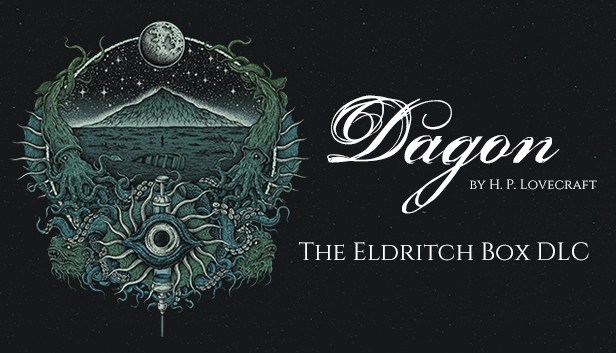
Dagon is a free 3D narrative experience based on the cult short story of the same title by the master of cosmic horror and weird fiction, H. P. Lovecraft himself. It’s an interactive portal into the world of the controversial genius and his highly acclaimed Cthulhu Mythos, open to both newcomers and long-time devotees.
SYSTEM REQUIREMENTS
(MINIMUM): Requires a 64-bit processor and operating system / OS: Windows 7/8/8.1/10 (x64) / Processor: Core i5-2400 or Ryzen 3 1200 / Memory: 4 GB RAM / Graphics: NVIDIA GTX 660 2GB VRAM or equivalent (GTX 970 for VR) / DirectX: Version 11 / Storage: 3 GB available space / Sound Card: DirectX compatible
Notice: This title runs in both standard and VR modes. It does not require a VR headset.




 TimeSpace Warps